
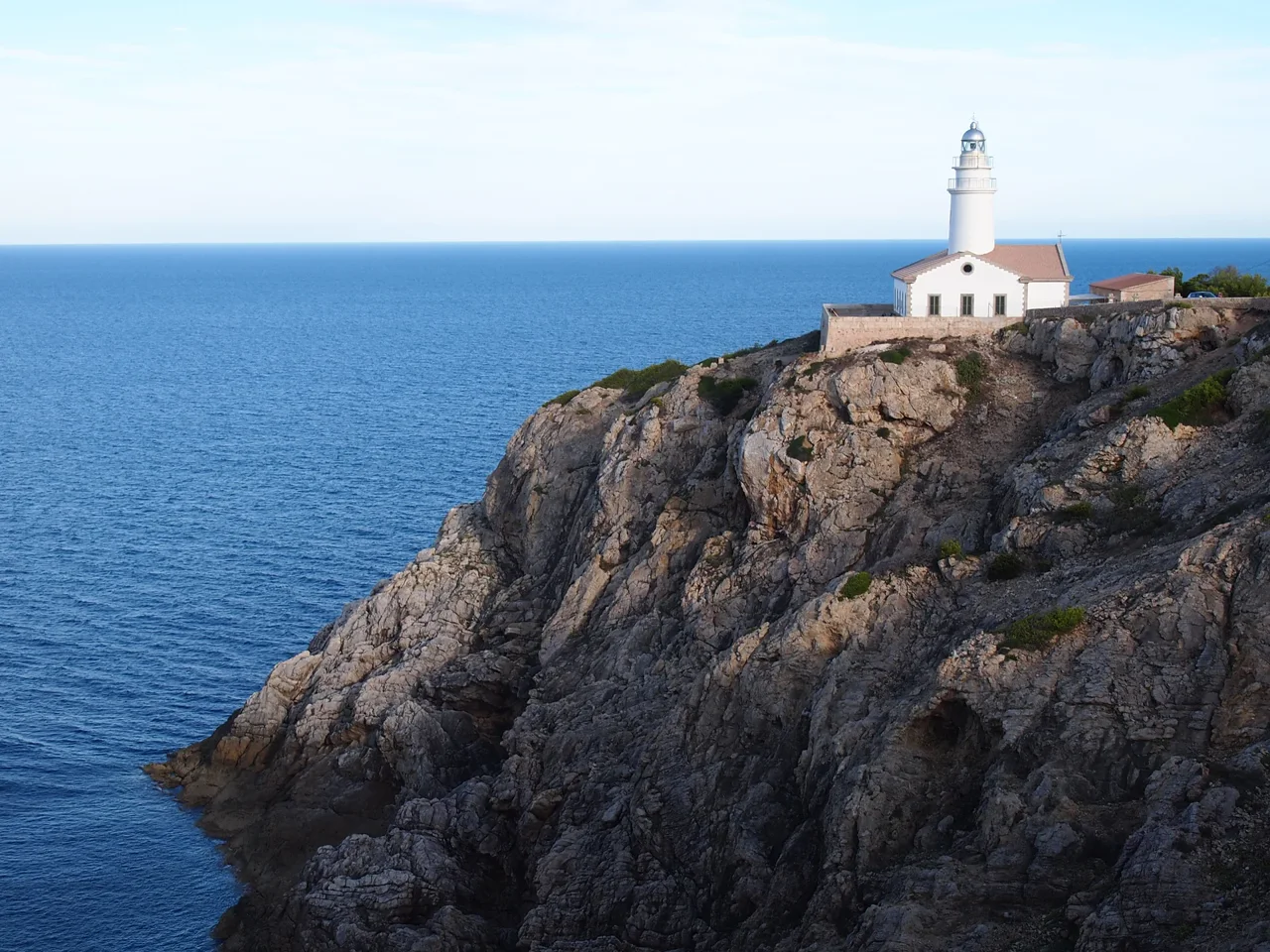
Some roads remain with you after the ride as a number: the gradient, the distance, the time. Others remain as a shape. Cap de Formentor is a line reaching toward a lighthouse between rock and sea. Sa Calobra is a road folded repeatedly into a mountainside. They are practical pieces of asphalt, but they are also two of Mallorca’s most recognisable cycling images.
That makes them interesting subjects for design. This article looks at how NUS Mallorca has interpreted those roads in its first two cycling jersey concepts, and at what gets gained or lost when a landscape becomes something worn.
Editorial note: this is a design analysis based on NUS Mallorca’s published story and current previews. The first samples are still in progress, so we have not tested the garments, fit, fabric or performance. The links to NUS are editorial links, not an endorsement based on a product test.
Start with the road riders remember
A successful place-inspired jersey needs more than the name of a climb printed across the chest. The place has to remain recognisable after most of its detail has been removed.
Formentor and Sa Calobra work because each has a clear visual structure. On the Cap de Formentor ride, the road keeps revealing sea, pale rock and the lighthouse at Mallorca’s northern edge. The experience is linear: an approach, a horizon and a destination. Sa Calobra is different. Its identity comes from repetition and compression—the switchbacks, the famous knot in the road and the sense that the asphalt and mountain have become inseparable.
Those structures provide a better starting point than a literal photograph. They give a designer a line, a rhythm and a hierarchy.
Formentor: horizon, lighthouse and restraint
NUS describes its Formentor concept as a near-black maillot carrying the final approach to the lighthouse. The long journey across the peninsula is reduced to a quiet bronze line, with the lighthouse acting as the destination rather than a decorative badge.
The dark ground matters. Formentor is usually photographed in bright Mediterranean light, but reproducing every blue and limestone tone would turn the jersey into a postcard. Near-black removes the scenery and lets the route read as memory: a narrow line, an edge and the feeling of travelling toward the end of the island.
That restraint also fits the road itself. The strongest part of Formentor is not one spectacular hairpin. It is the accumulation of rollers, viewpoints and exposed sections before the lighthouse appears. The NUS Cap de Formentor design preview keeps that sense of approach instead of isolating one landmark.
Sa Calobra: movement drawn into the mountain
Sa Calobra needs another treatment because riders remember it differently. The road is choreography: descend through the turns, reach the cove, then climb every metre back out. Its visual signature is the repeated curve.
The NUS concept uses an ivory ground and an illustrated mountain road across the back. Ivory connects more naturally to sunlit stone, while the road drawing carries the movement. The result is more pictorial than the Formentor concept, which suits a climb whose engineering is the spectacle.
The design also makes a useful distinction between route data and route identity. A profile graph can tell you where Sa Calobra becomes steep; an illustration can recall what it feels like to see switchbacks stacked above you. The NUS Sa Calobra design preview chooses the second job.
What survives the translation
Turning a road into clothing forces a series of edits. Elevation, weather and effort disappear. What remains has to work from a distance, around a moving body and without a paragraph of explanation.
Three choices do most of the work in these concepts:
- Silhouette: Formentor becomes an approach toward the lighthouse; Sa Calobra becomes a repeated mountain curve.
- Colour: near-black and bronze make Formentor feel distant and restrained; ivory gives Sa Calobra the warmth of exposed stone.
- Placement: the landmark artwork sits across the garment rather than behaving like a souvenir logo applied afterward.
That last point separates place-based design from generic destination merchandise. The road is part of the composition, not simply evidence that the product comes from Mallorca.
A preview, not a performance verdict
There is still a gap between a convincing image and a convincing cycling jersey. Fabric changes colour. Seams interrupt lines. Pockets, zips and a rider’s position alter the composition. Fit and comfort only become real once samples exist and are ridden.
NUS states that the Formentor and Sa Calobra garments are design previews and that the first samples are in progress. That is the honest point at which to judge the visual idea while reserving judgment on the physical product. The next meaningful evidence will be photographs of the samples, close views of how the artwork crosses panels, and time on the road.
Why these two roads belong together
As a first pair, Formentor and Sa Calobra show two different sides of Mallorca cycling. One stretches outward to a lighthouse; the other folds inward through a mountain. One is read as a horizon; the other as a sequence of bends. Together they avoid reducing the island to a single visual formula.
They also give riders a meaningful way into the story. Someone who has watched sunrise on Formentor or climbed out of Sa Calobra already brings a memory to the garment. The design does not need to manufacture that connection; it needs to leave enough room for it.
You can explore the first NUS Mallorca collection, or start with the roads themselves: plan Cap de Formentor and Sa Calobra with the practical route data, conditions and local guidance in Mallorca Cycling Lab.


